Political Cartoons give a satirical interpretation of political events and issues. More so than other types of images, political cartoons use visual codes, symbols, images and words to convey their message. Their purpose is to present various perceptions of political debates and issues in a humorous way. There are two main types of political cartoons, an “Editorial Cartoon” that is usually a single image/panel, and responds to the immediate political issues. These cartoons are usually printed on the front page or opinion pages of the newspaper. ” Political Cartoon Strips” consist of more than one image/panel and are a recurring feature in the newspaper. These strips do not usually relate to the ‘immediate’ political issue, as the editorial cartoon do, but are still relevant to the local and national politics
In this module you will analyze political cartoons from a variety of newspapers published in different regions of the country. You will practice how to read ‘in between the lines’ as you make sense of the codes and messages represented in the cartoons: You will:
- Contextualize the cartoons to see what aspects of the current political news they are representing.
- Explore the symbolism in the cartoons and explain how the cartoonist represent issues related to the “Separate but equal” doctrine.
- Examine how the cartoonist use other codes- exaggeration, analogy, irony and other techniques to sway public opinion.
Pre-Reading and Video
Cartoonist can be an important voice of dissent: but they can also be divisive. The Conversation. October 23rd, 2018.
Activity:
Analyze political cartoons from different regions of the country to ascertain what they say about societal response to notion of “Separate but Equal” and use this information to create an annotated timeline of the issues and events depicted in the cartoons.
Below are eight political cartoons taken from four different newspapers from the Northern and Southern regions of the country.
Observe: Take a look at the cartoons and write down your first Impressions by responding to the following questions:
- What issues do the cartoons respond to? Describe the cartoons- images, text, etc.
- Are there any common themes that run through the cartoons?
- What are the similarities/differences between the groups?
- Can you identify which are from Northern Newspapers and which are from the South?
- What evidence do you have that supports/confirms your inferences?
- What information do you need to make a more accurate inference?
- What other questions do you have about the cartoons?
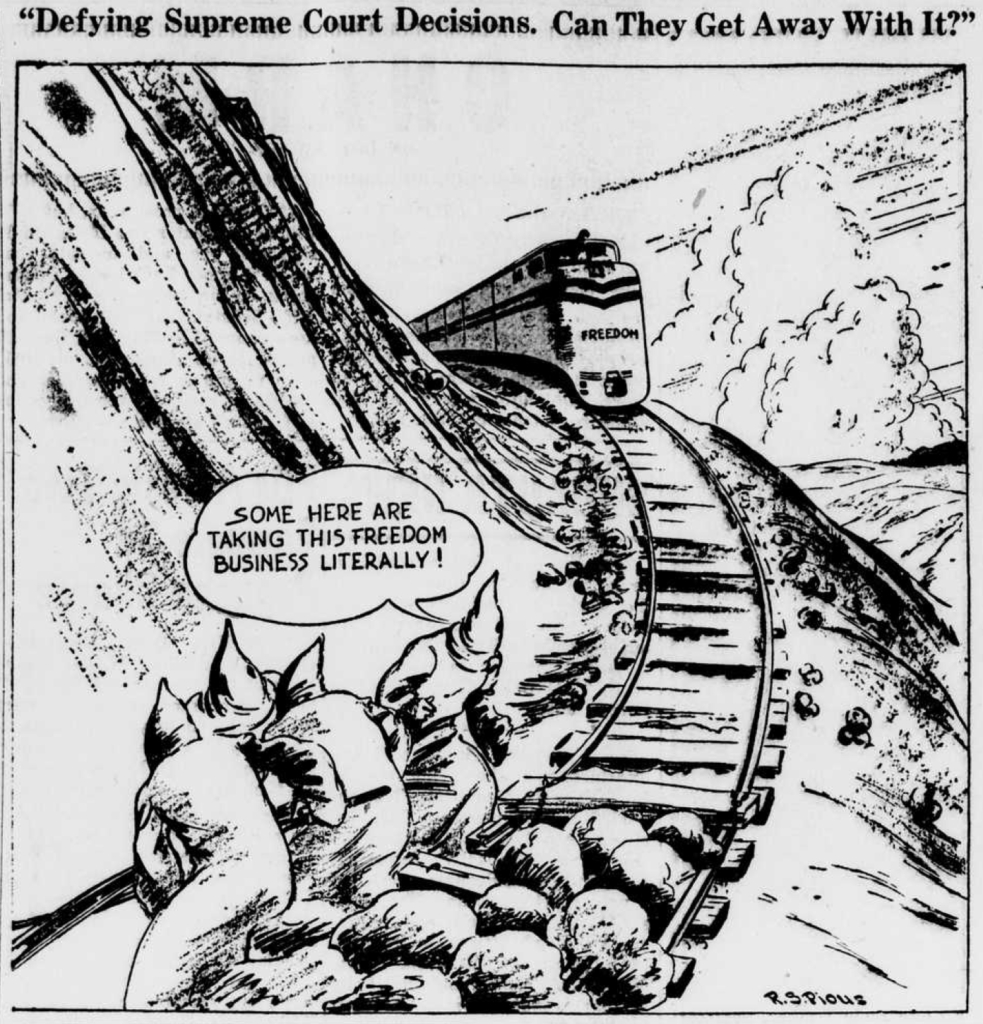
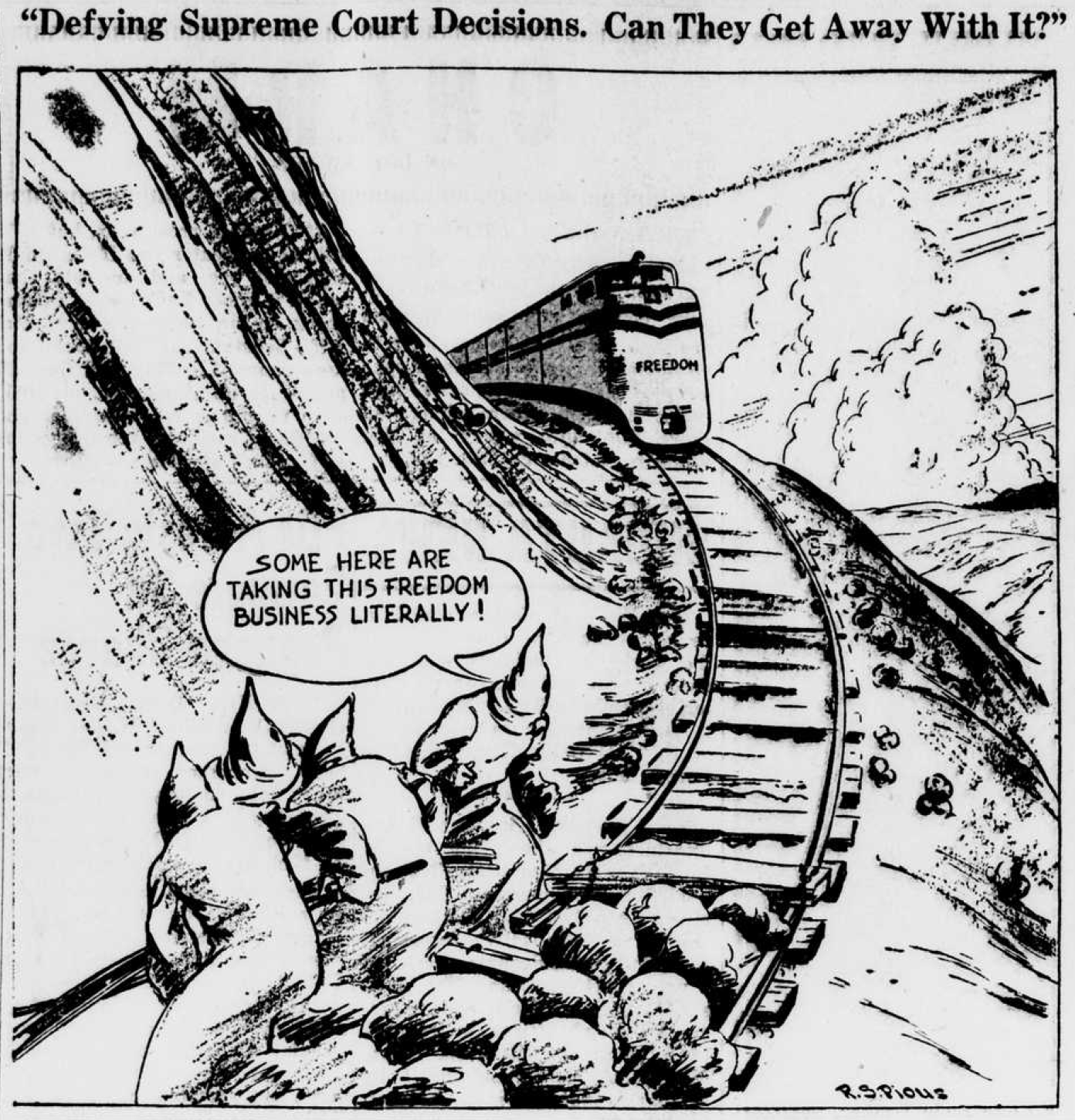
“Defying Supreme Court Decisions. Can They Get Away With It? ” 1953 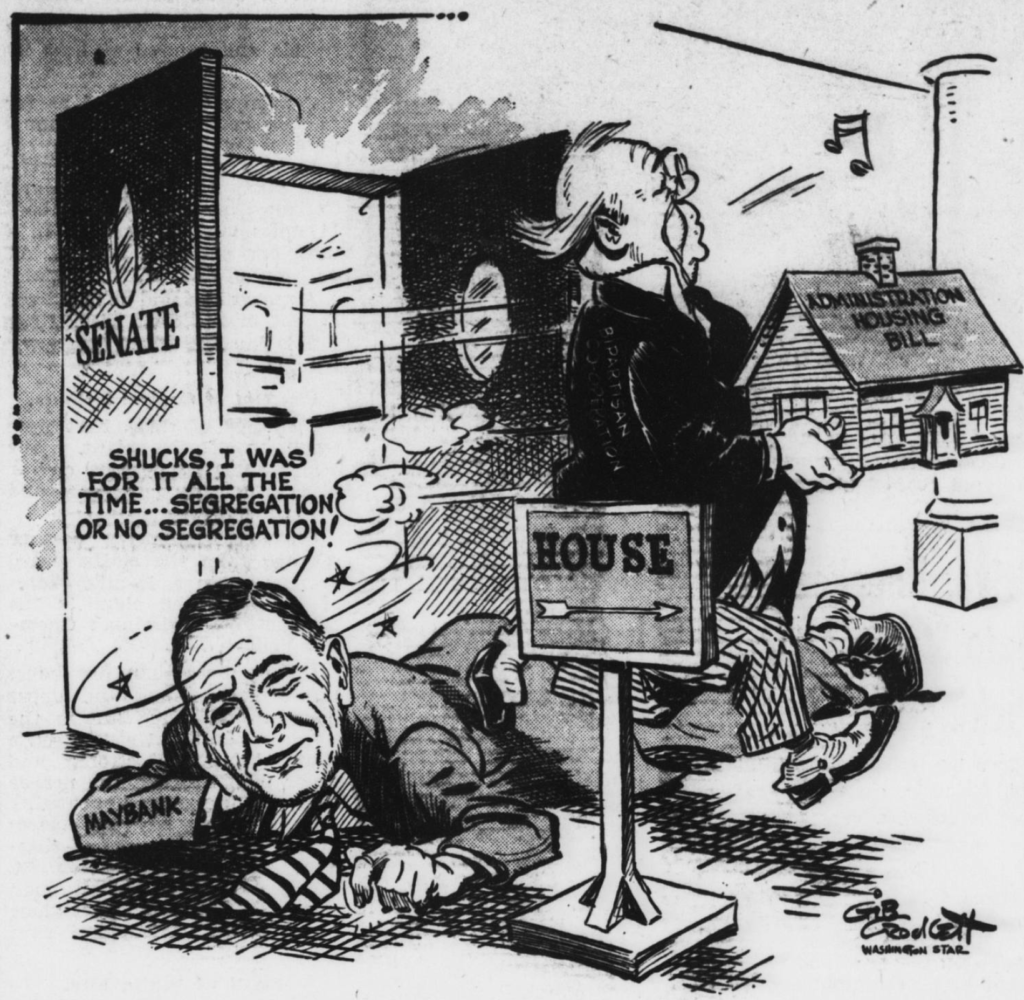
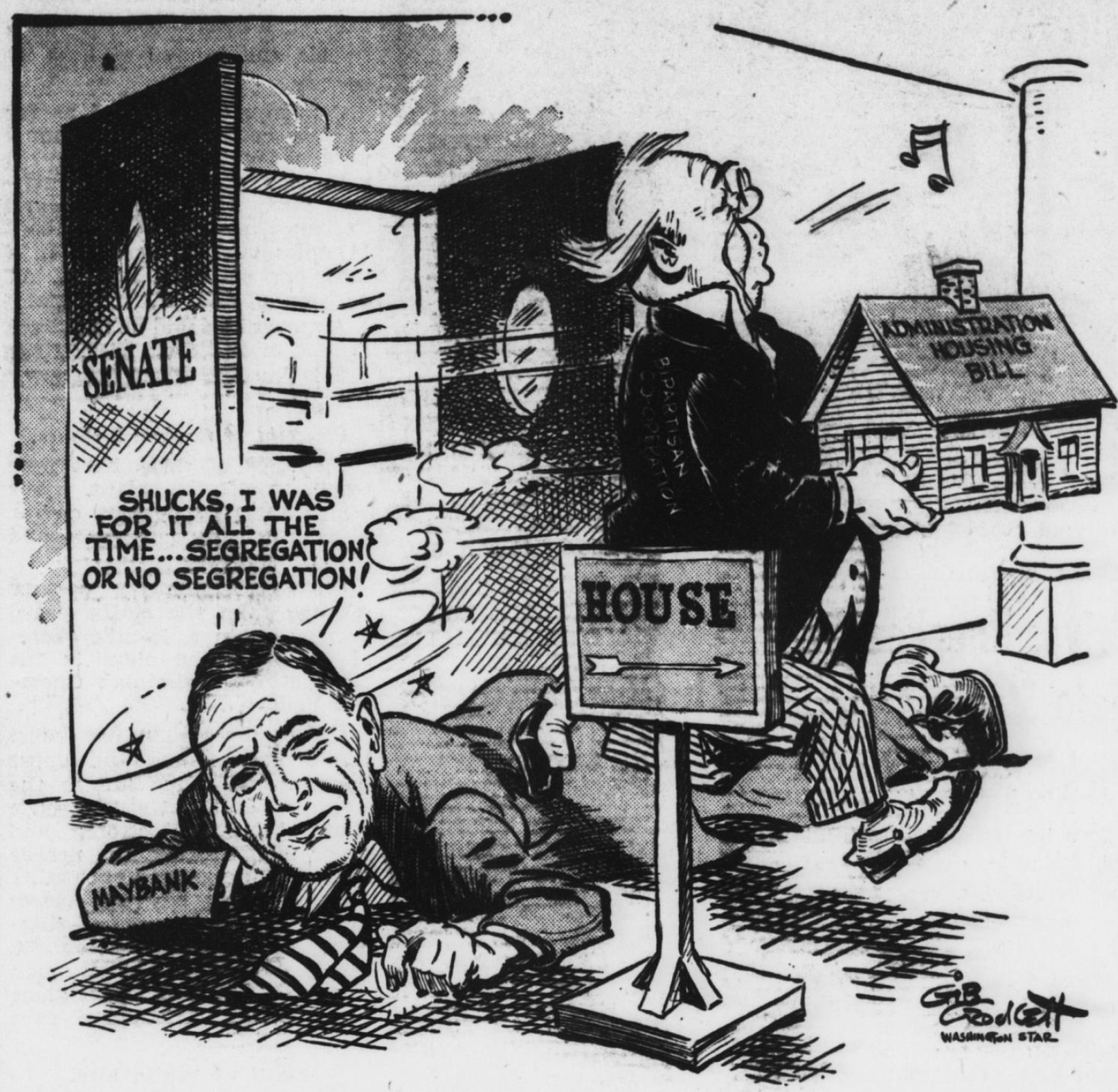
“Shucks, I was for it all the time…SEGREGATION OR NO SEGREGATION” 1954 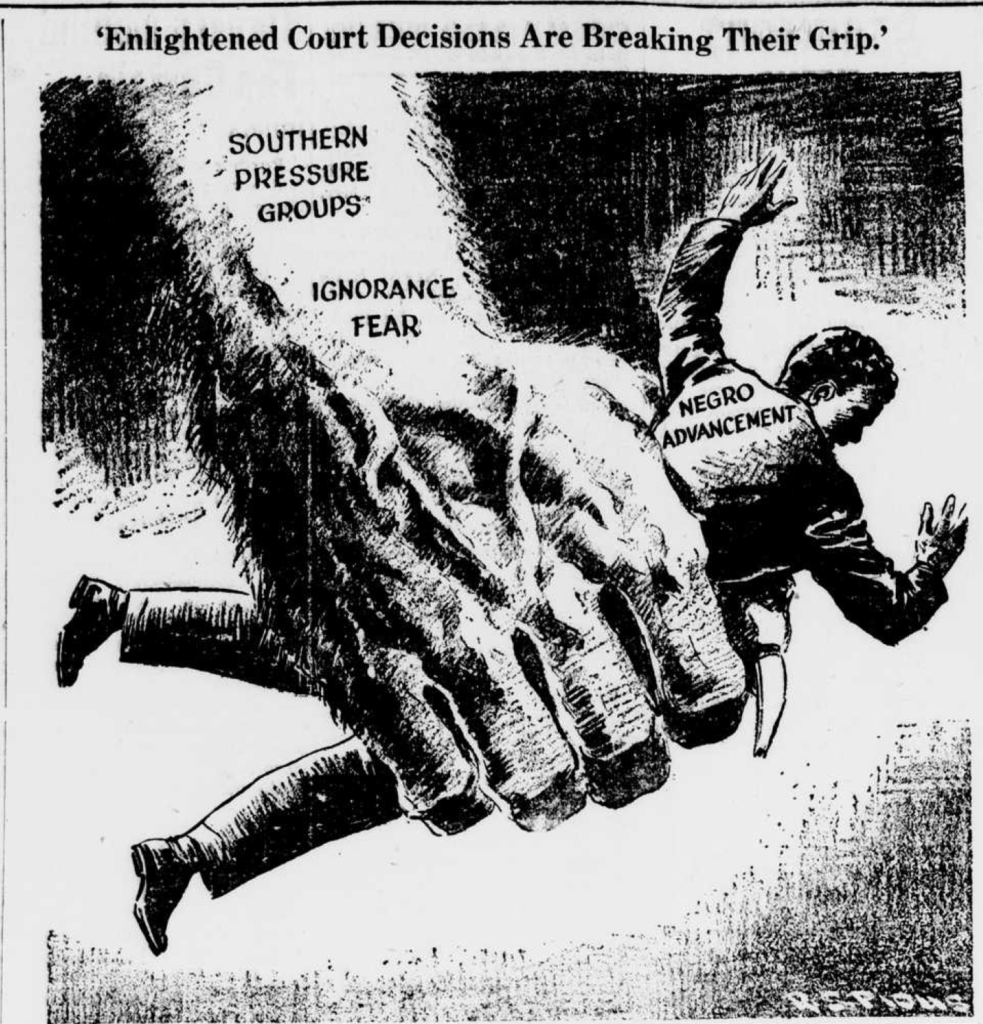
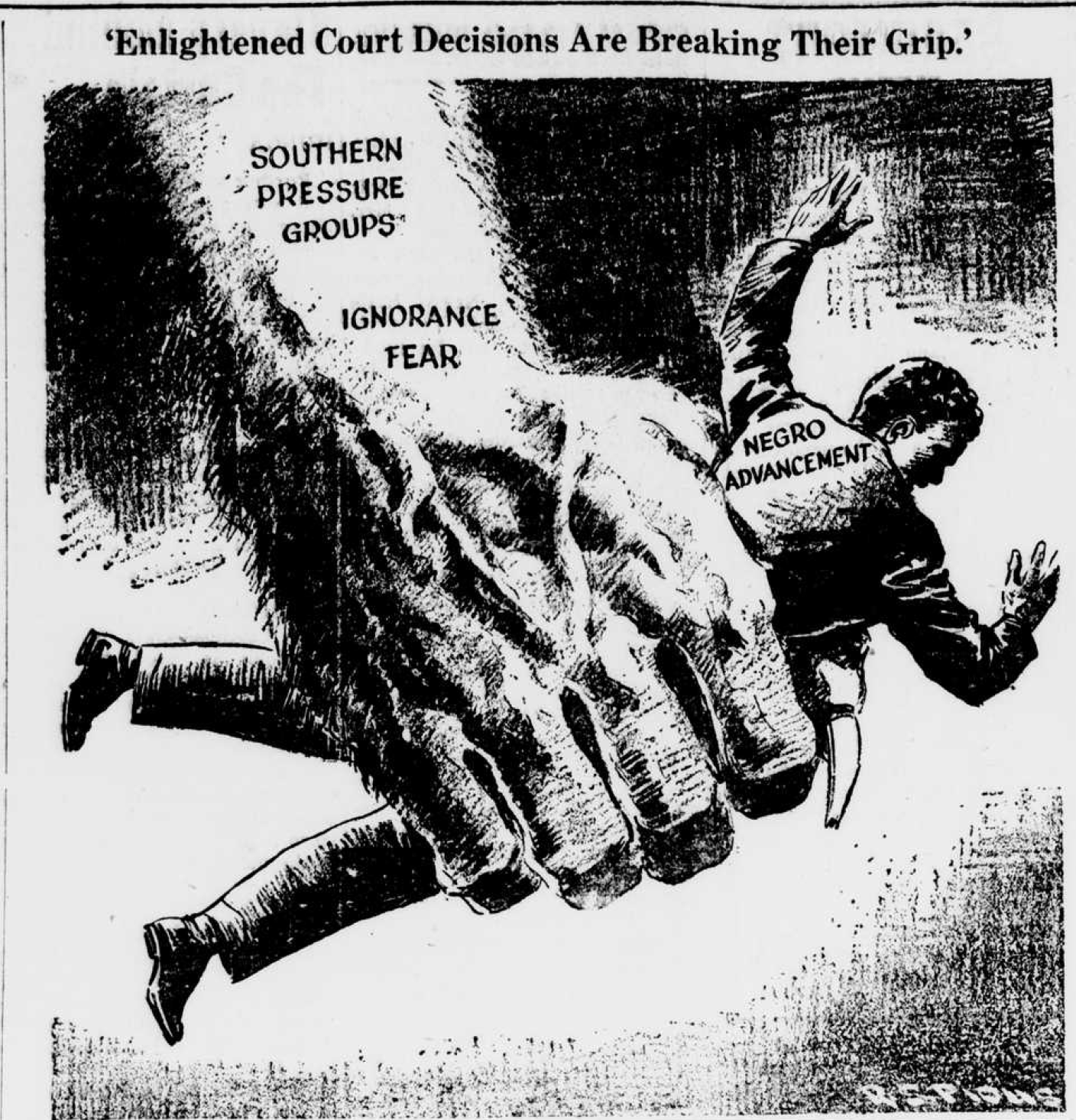
“Enlightened Court Decisions Are Breaking Their Grip”. 1954 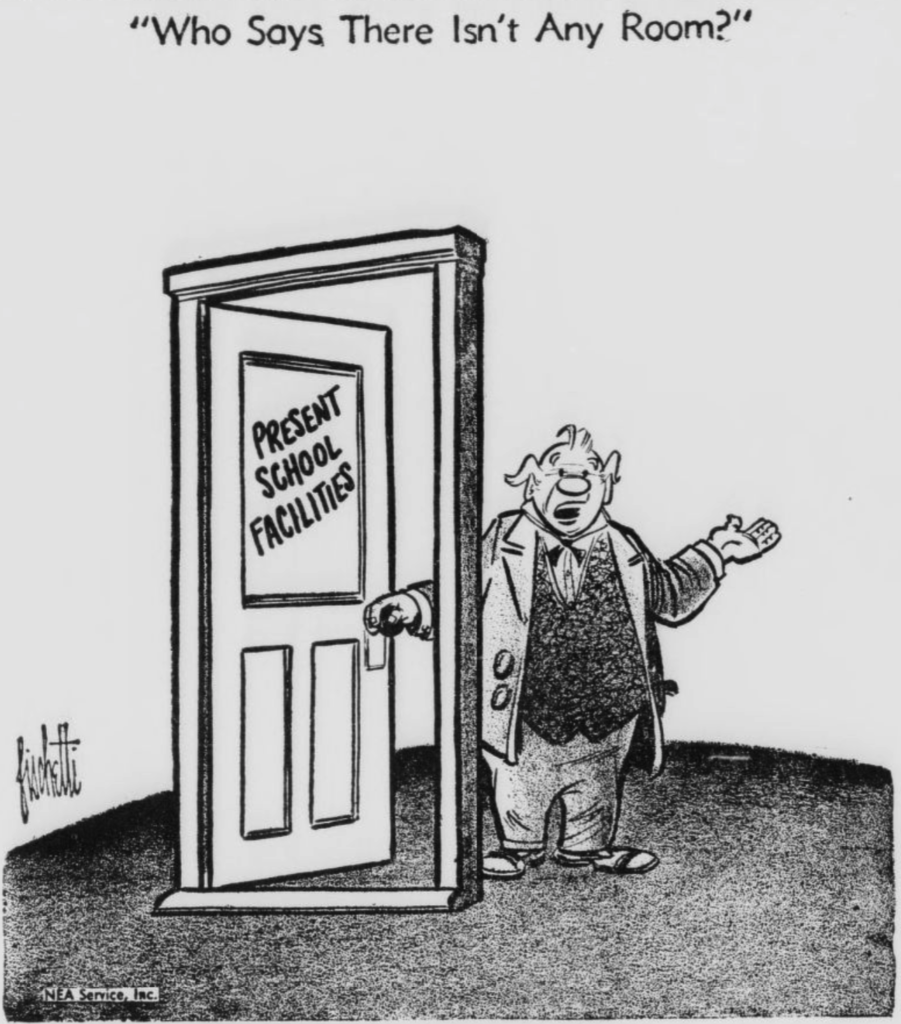
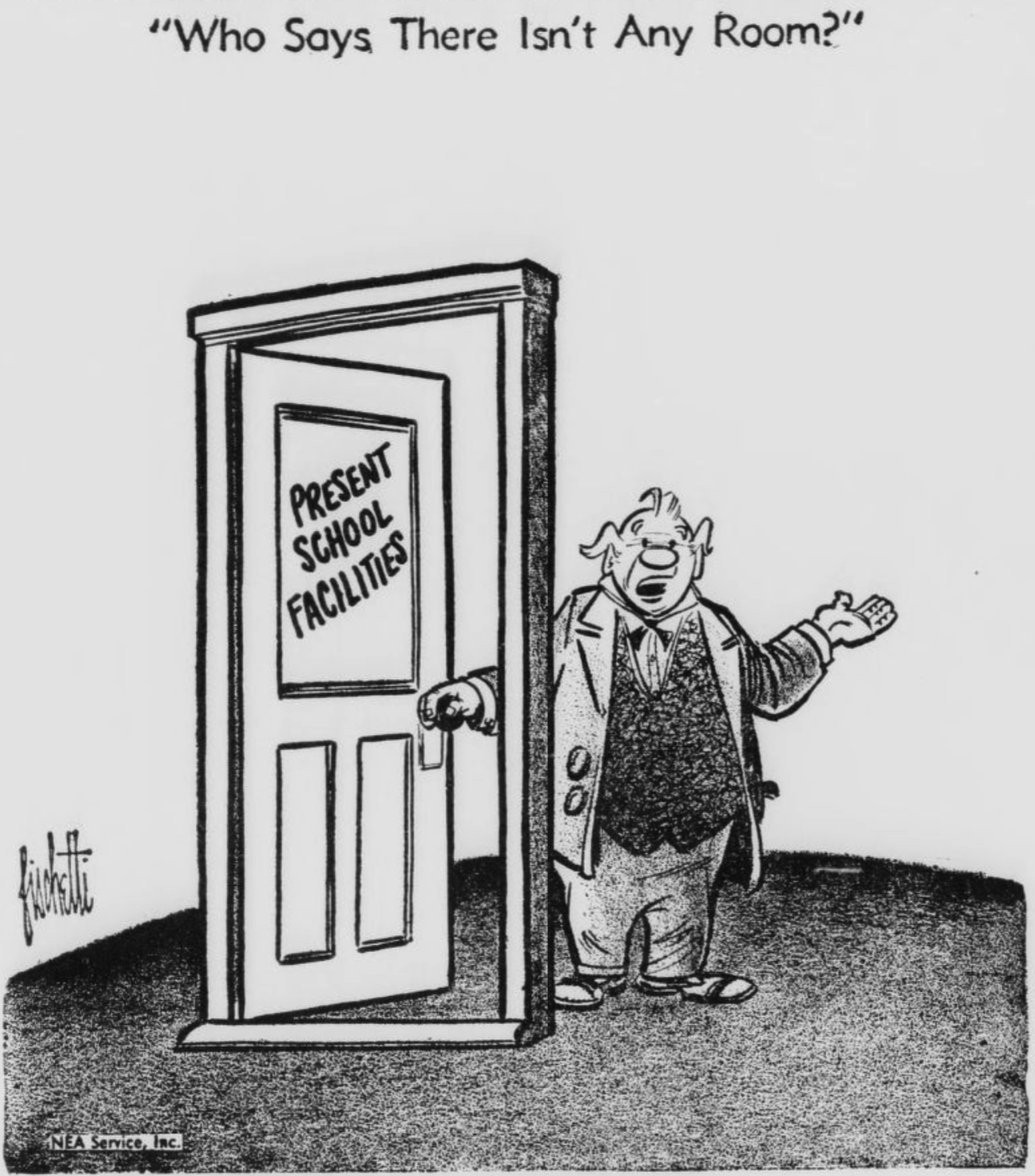
“Who says there isn’t any room” .1955 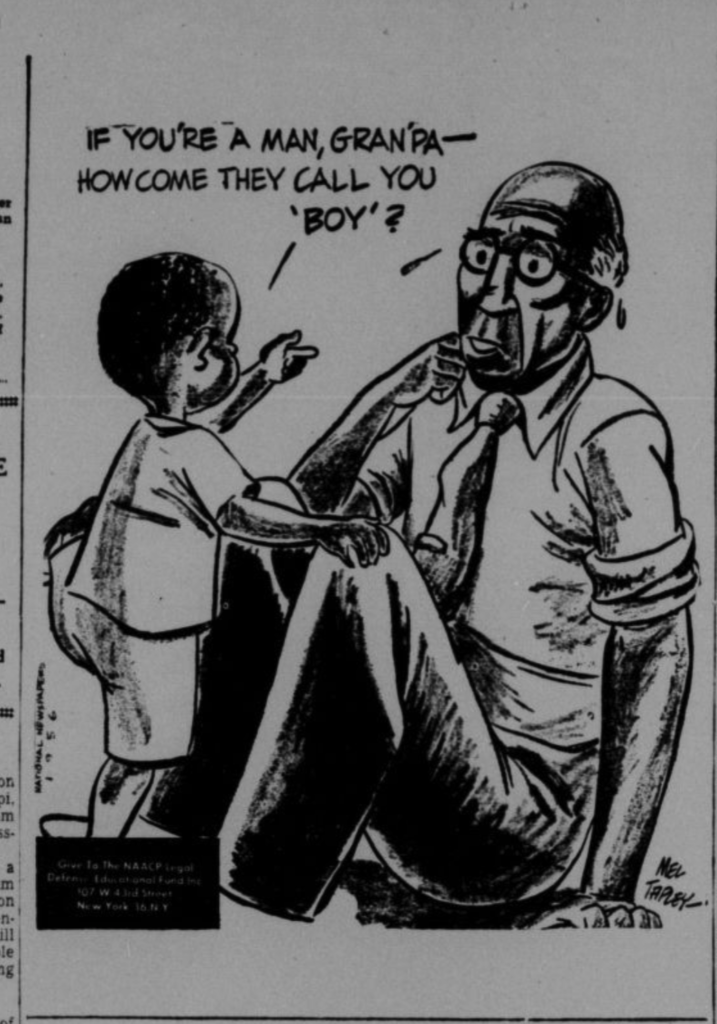
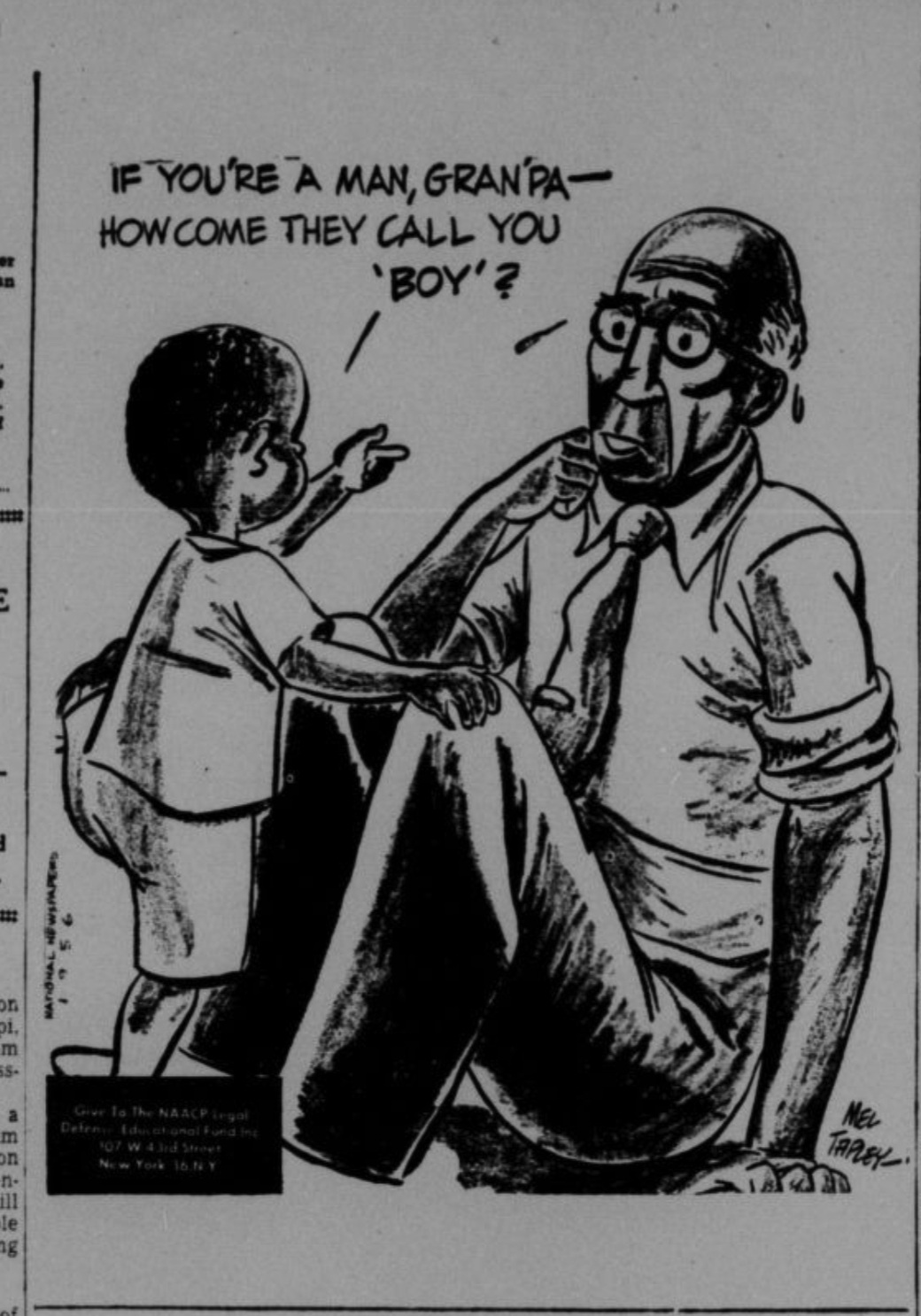
“If you’re a man, grandpa- how come they call you a boy?” 1956 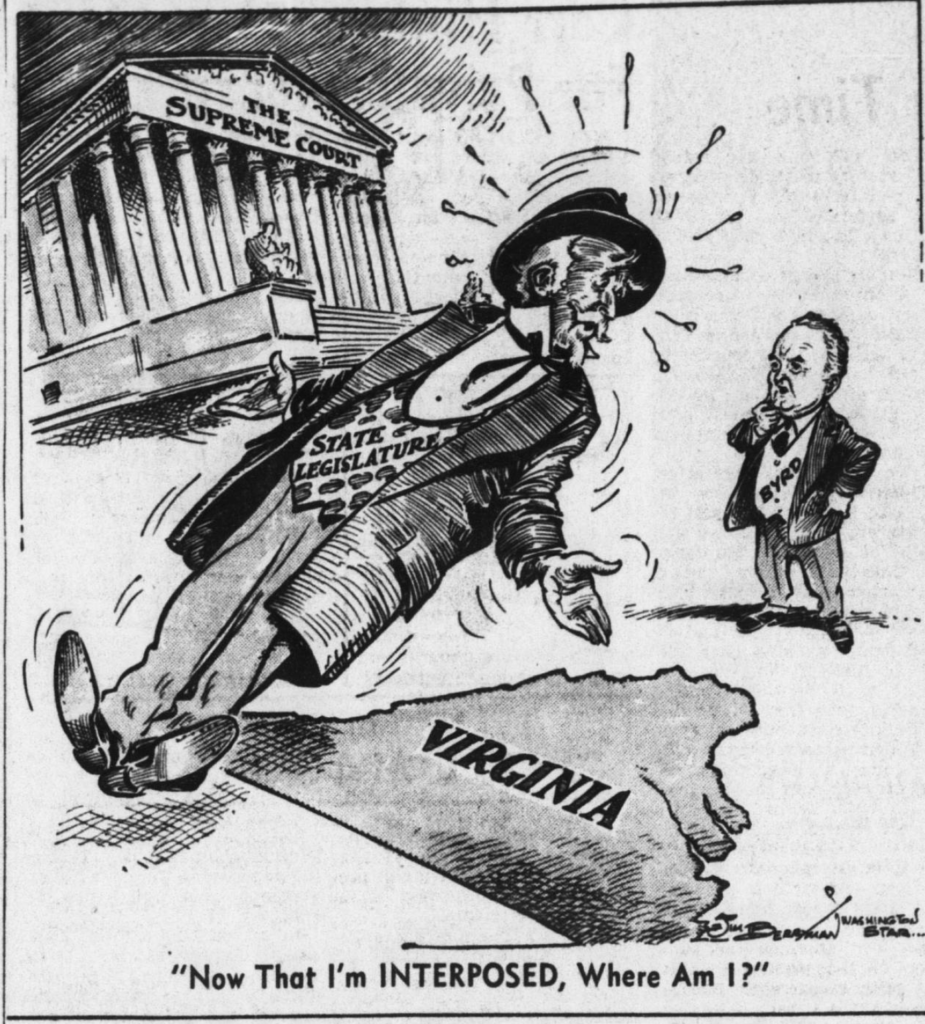
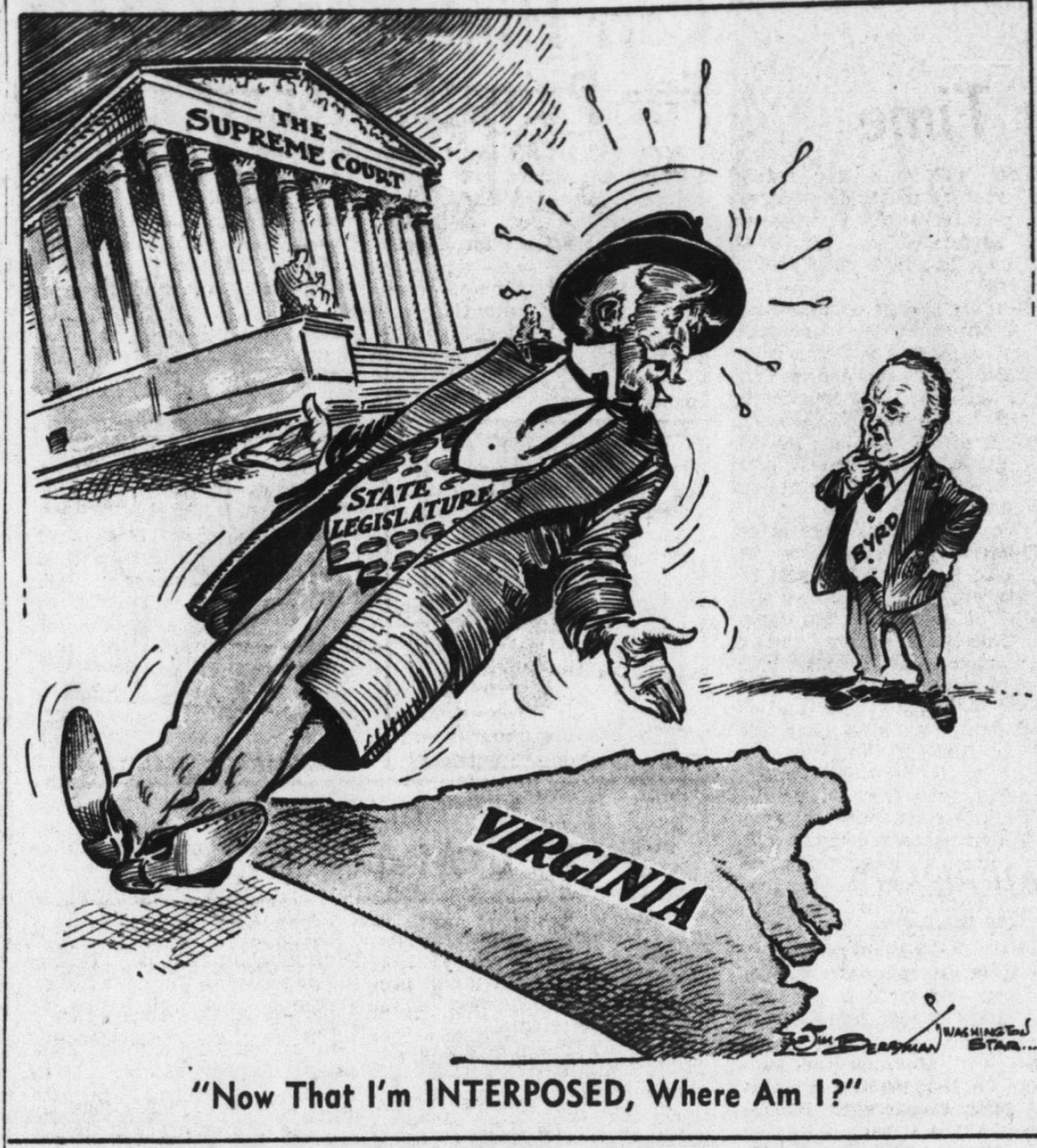
“Now that I’m INTERPOSED Where am I” 1956 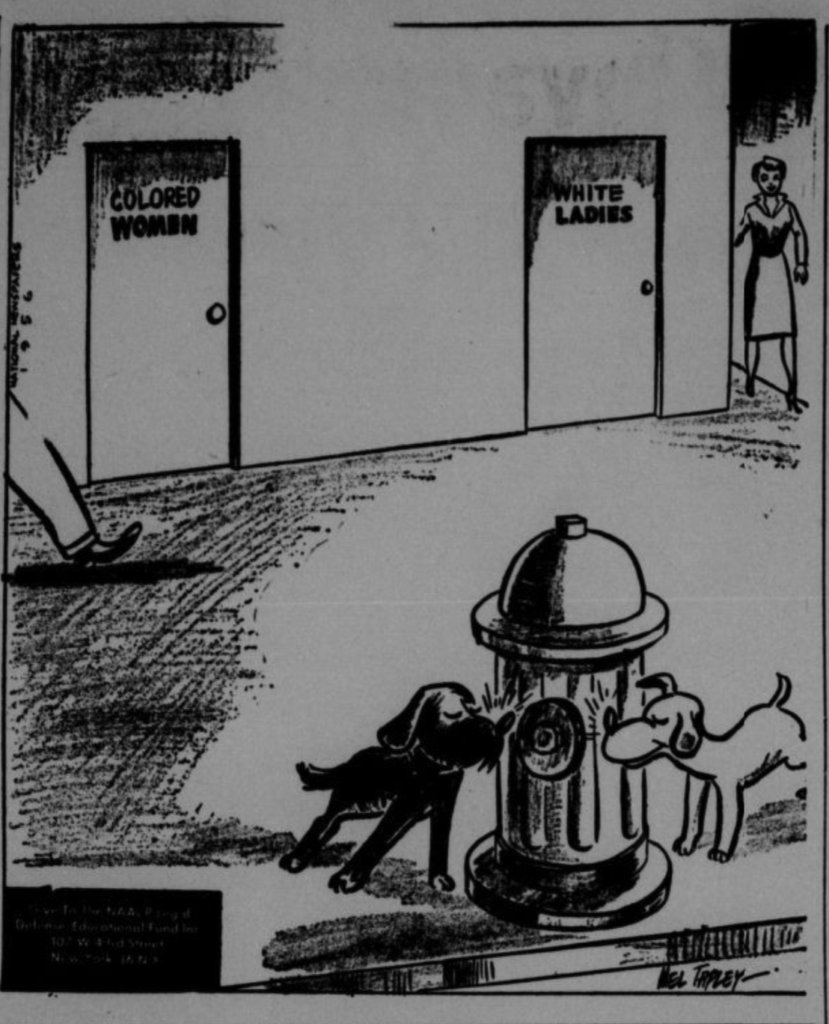
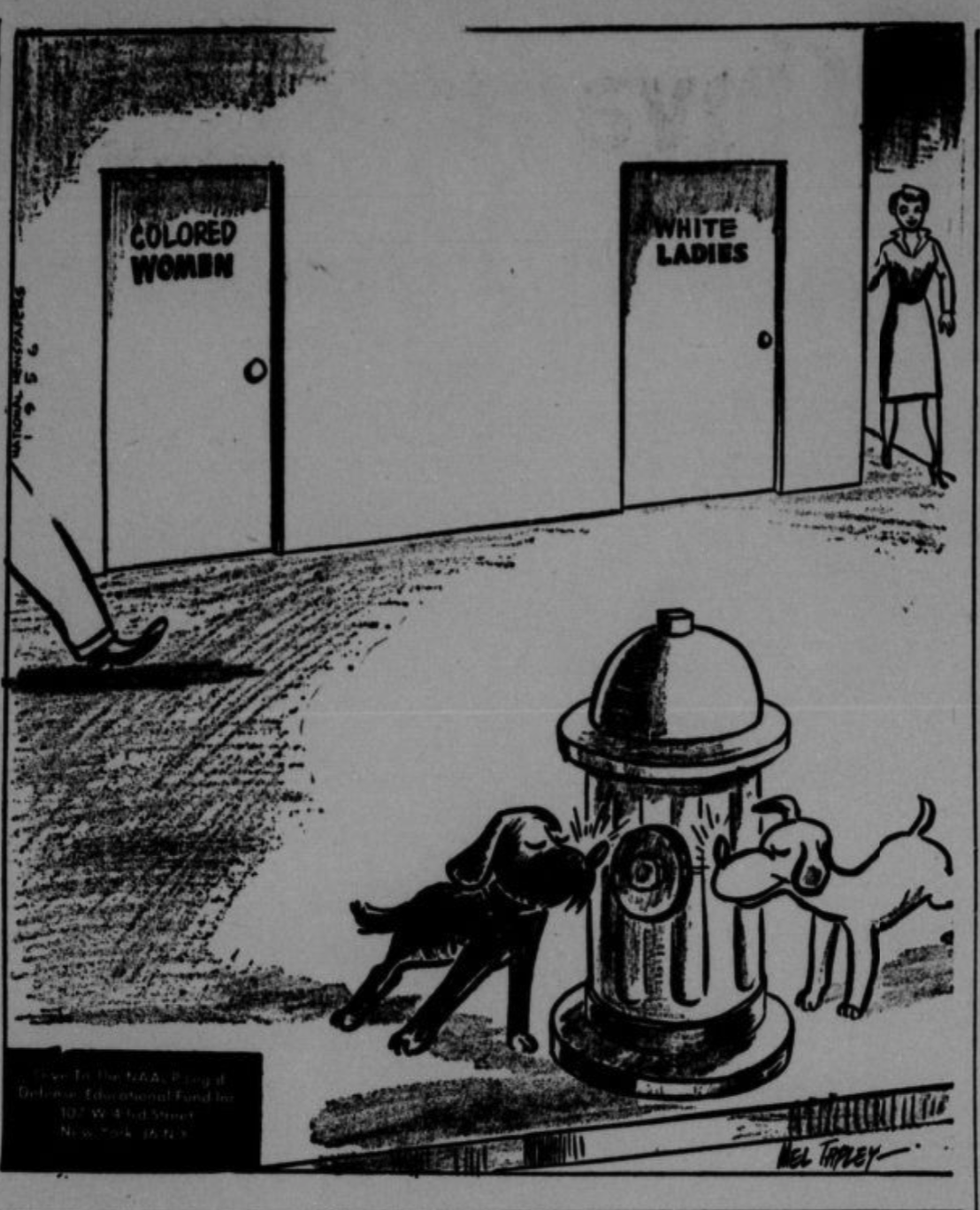
“Colored Women…White Ladies” 1956 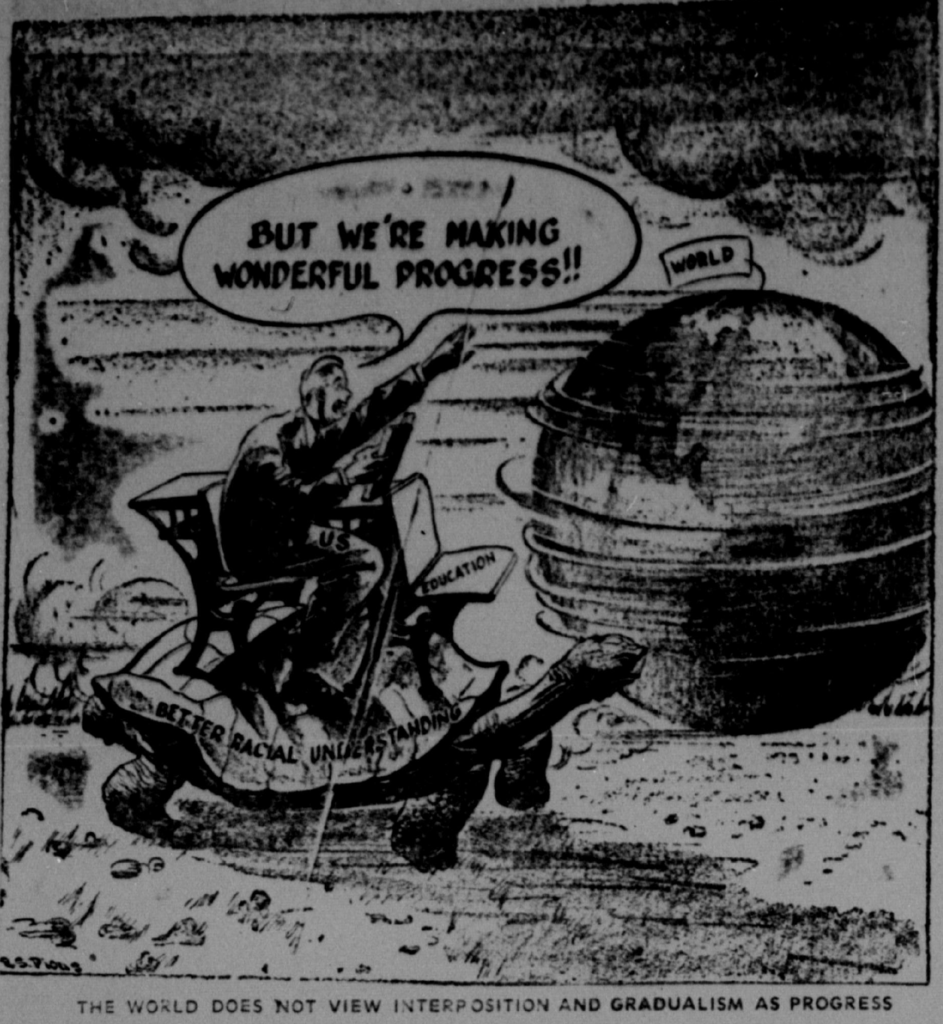
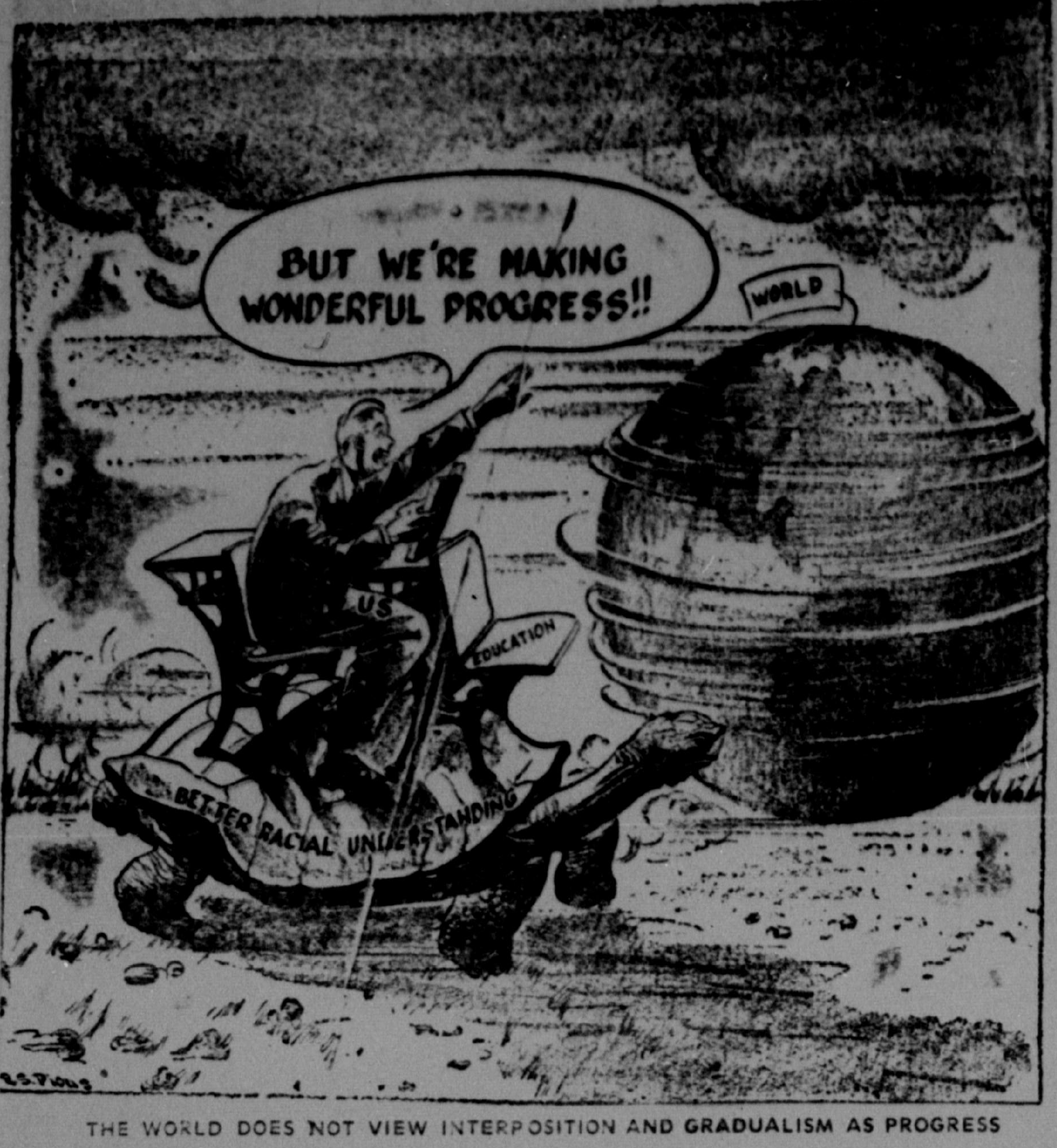
“The world does not view interposition and gradualism as progress.” 1960
Contextualize: Now try to contextualize the cartoons. Look at the dates of these cartoons. Examine the Plessy Timeline again and the pages of these newspapers or the complete issues to see if you can find out what was at the forefront of the National or Local news at that time.
| All newspapers are available from the Library of Congress Chronicling America Collection “Defying Supreme Court Decisions. Can They Get Away With It? ” 1953 . R.S. Pious. Jackson Advocate. Pg.4 January 3rd. 1953. Library of Congress. Chronicling America. https://chroniclingamerica.loc.gov/lccn/sn79000083/1953-01-03/ed-1/ “Shucks, I was for it all the time…SEGREGATION OR NO SEGREGATION” 1954 Gibb Crockett. Washington Evening Star. (D.C.) June 5th, Front Page. Library of Congress. Chronicling America. https://chroniclingamerica.loc.gov/lccn/sn83045462/1954-06-05/ed-1/ “Enlightened Court Decisions Are Breaking Their Grip”. 1954 R.S. Pious. Jackson Advocate. Pg.4 January 2nd. 1954. Library of Congress. Chronicling America. https://chroniclingamerica.loc.gov/lccn/sn79JA_JAn_2000083/1954-01-02/ed-1/ “Who says there isn’t any room” 1955 The Daily Record. John Fischetti January 24, pg. 6. Library of Congress. Chronicling America. https://chroniclingamerica.loc.gov/lccn/sn88063132/1955-01-24/ed-1/seq-6/ “If you’re a man, grandpa- how come they call you a boy?” Mel Tapley. Detroit Tribune. pg. 4. June 30th,, 1956. Library of Congress. Chronicling America. https://chroniclingamerica.loc.gov/lccn/sn92063852/1956-06-30/ed-1/seq-4/ “Now that I’m INTERPOSED Where am I” 1956. Bejun Bergman. Evening Star. (D.C.) .February 3rd, pg. A-10. Library of Congress. Chronicling America. https://chroniclingamerica.loc.gov/lccn/sn83045462/1956-02-03/ed-1/ “Colored Women…White Ladies”. 1956. Mel Tapley. Detroit Tribune. September 22, Pg.4. Library of Congress. Chronicling America. https://chroniclingamerica.loc.gov/lccn/sn92063852/1956-09-22/ed-1/ “The world does not view interposition and gradualism as progress.” 1960. R.S. Pious . Detroit Tribune. pg. 5 .December 3rd, Library of Congress. Chronicling America. https://chroniclingamerica.loc.gov/lccn/sn92063852/1960-09-03/ed-1/ |
Activity: With the information that you already know, develop an annotated timeline of the events portrayed in these cartoons.
Put the following details in your annotation.
- The Event/Issue: Name and date of event/issue
- Significance: A few sentences explaining why you think that event or issue is important/relevant to the history of “Separate but Equal”.
- The Newspaper: The Newspaper Title, date and region (North/South)
- Cartoon. The Title of the Cartoon and Artist
- The Message *Your interpretation of the cartoon. ( You will complete this in the activity below)
Analyze: Now take a closer look at each cartoon. Select two cartoons and use the readings and the questions in the activity to analyze your cartoons. Use your analysis to write a short interpretation of complete ” The Message” section of your timeline.
Evaluating Cartoons
-
Evaluating Cartoons
1. “If you’re a man, grandpa- how come they call you a boy?” Mel Tapley. Detroit Tribune. pg. 4. June 30th,, 1956
2. “Colored Women…White Ladies”. Mel Tapley. Detroit Tribune. Pg.4 September 22,pg.4 1956.
3. “Now that I’m INTERPOSED Where am I” Bejun Bergman. Evening Star. (D.C.) pg. A-10. 1956.
4.“Shucks, I was for it all the time…SEGREGATION OR NO SEGREGATION” 1954 Gibb Crockett. Washington Evening Star. (D.C.) Front Page. June 5th, 1954.
5. “Who says there isn’t any room” John Fischetti .The Daily Record. January 24, pg. 6. 1955.
6. “Enlightened Court Decisions Are Breaking Their Grip”. R.S. Pious. Jackson Advocate. Pg.4 January 2nd. 1954.
7. “Defying Supreme Court Decisions. Can They Get Away With It? ” R.S. Pious. Jackson Advocate. Pg.4 January 3rd. 1953.
8. “The world does not view interposition and gradualism as progress.”. R.S. Pious . Detroit Tribune. December 3rd, pg. 5 1960.
Cartoonists use some of the following techniques to convey their message:
SYMBOLISM- An object that represents a larger idea or concept
EXAGGERATION- overstating or magnifying a problem
LABELING- make it clear exactly what objects or people stand for.
ANALOGY- a comparison between two unlike things that share some characteristics; help their readers see an issue in a different light.
IRONY- the difference between the ways things are, and the way things should be, or the way things are expected to be.
Take a close reading of 2 cartoons and use the following questions and readings to help you analyze the cartoons to understand what the cartoonist was trying to communicate.Write a short paragraph of your interpretation of the cartoons for your timeline.
Interpreting Political Cartoons Historical SkillsHow to analyze an Editorial Cartoon. Herb Block Foundation.
-
Complete your timeline, and add your interpretation of two of the cartoons.
