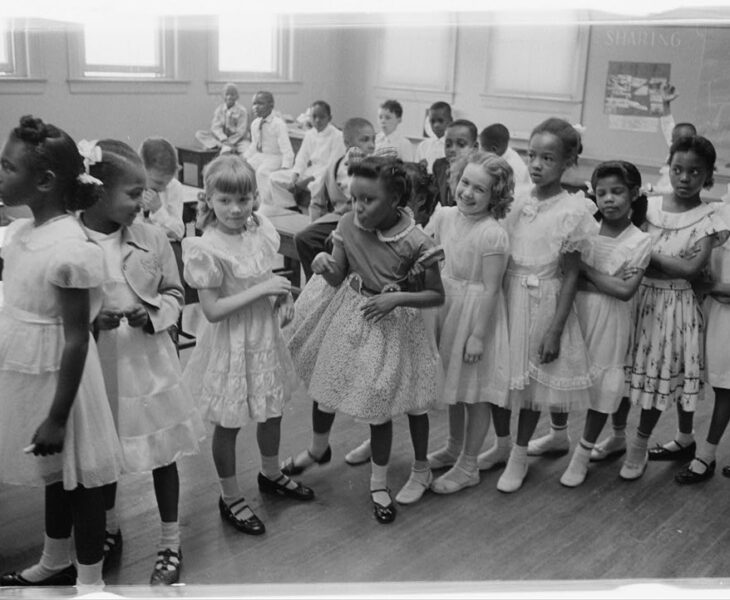
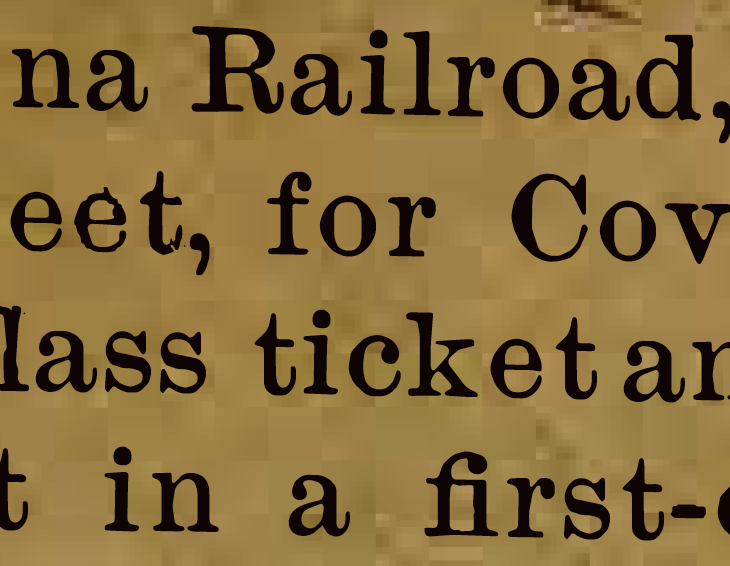
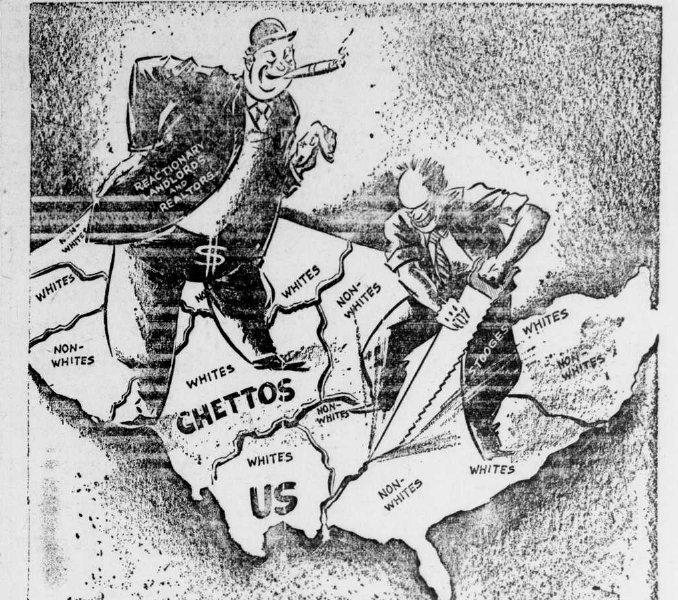
In 1892 Holmer Adolph Plessy refused to give up his seat in railroad car in defiance of the Louisiana Separate Car Act of 1890. Plessy was arrested, tried, and convicted in the 1896 Plessy v Ferguson Supreme Court case. In addition to allowing Louisiana to enforce the legal separation of the races within its boundaries, the ruling also legalized the separation of races in the States. This 1896 ruling became the standard for all segregation rulings. The Southern states responded by instituting a battery of laws and practices known as “Jim Crow” and Baltimore became the first city to pass a residential segregation ordinance. Plessy v. Ferguson remained unchallenged until Brown Vs Board of Education in 1954. This ruling established that “separate but equal’ could not be applied to the education system, and marked the end of legal segregation in the schools and the start of massive resistance across the country.
“… all railway companies carrying passengers in their coaches in this state, shall provide equal but separate accommodations for the white, and colored races, by providing two or more passenger coaches for each passenger train… No person or persons shall be permitted to occupy seats in coaches, other than the ones assigned to them, on account of the race they belong to.’
Transcript of Plessy v. Ferguson (1896 )
“Exploring Plessy v. Ferguson. 1896 ” will take you through an exploration of the impact and controversy surrounding the “Separate but Equal’ doctrine that Plessy v. Ferguson established. Through the examination of court documents, commentaries, newspapers, paintings, photographs and other records and relics you will:
- Analyze primary sources to abstract relevant evidence.
- Use the evidence to examine different perspectives, interpretations and responses to the “Separate but Equal” doctrine.
- Comment on its impact on the society and American Life in 2021.
