 admin
admin The Black Codes (1865-
During Reconstruction Blacks had the right to vote and had some limited protection from oppression under the law. When Reconstruction failed, Southern whites felt empowered, and continued to oppress blacks by establishing laws that would restrict the freedom of the newly freed slaves and compelling them to continue working for their white masters in an environment reminiscent of slavery. These laws were known as “Black Codes” their main purpose was to disenfranchise blacks, restrict their ability to own business or property and to prevent them from traveling freely within and out of the states. They often used Vagrancy Laws to enforce these restrictions by punishing black men for not working or for simply congregating on the streets.
Explore the Black Codes:
While you explore the documents think about the ways in which these laws were similar to slavery.
| 1. Take a look pp. 291-304. | “An Act to Establish and Regulate the Domestic Relations of Persons of Color and to Amend the Law in Relation to Paupers and Vagrancy” Acts of the General Assembly of the State of South Carolina Passed at the Sessions of 1864-65 (Columbia: 1865), pp. 291-304. |
| 2. Take a look at Images 33-40 the section titled ” The Black Laws in Ohio Since 1802″ | 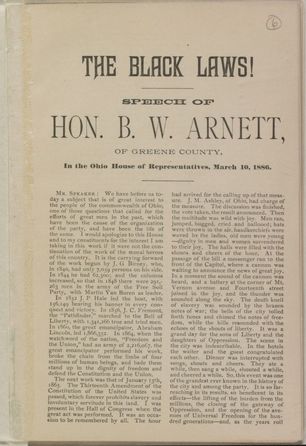 The black laws! : speech of Hon. B.W. Arnett of Greene County, and Hon. J.A. Brown of Cuyahoga County, in the Ohio House of Representatives, March 10, 1886. |
Plessy v. Ferguson 1896- The Details
Explore some primary documents to learn about the case. At the end of your exploration respond to the final question.
| The Sources | |
| 1. Take a look at this timeline of key events surrounding the Court Case. RESPONSE How do you think the events leading up to Plessy influenced the court decision? | 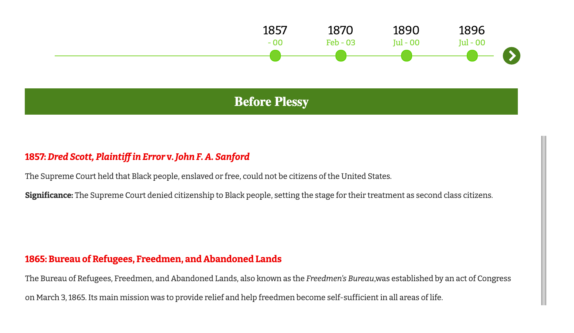 Plessy v. Ferguson events Plessy v. Ferguson events |
| 2. Read this account of the event in the New Orleans Crusader. RESPONSE How do you think the fact that this is an African American newspaper has influenced the telling of the event? What do you think is missing from the story? Why do you think Plessy chose this specific time to sit in the white section? Why do you think Plessy was sold a first class ticket and yet not permitted to sit in the first-class compartment? | 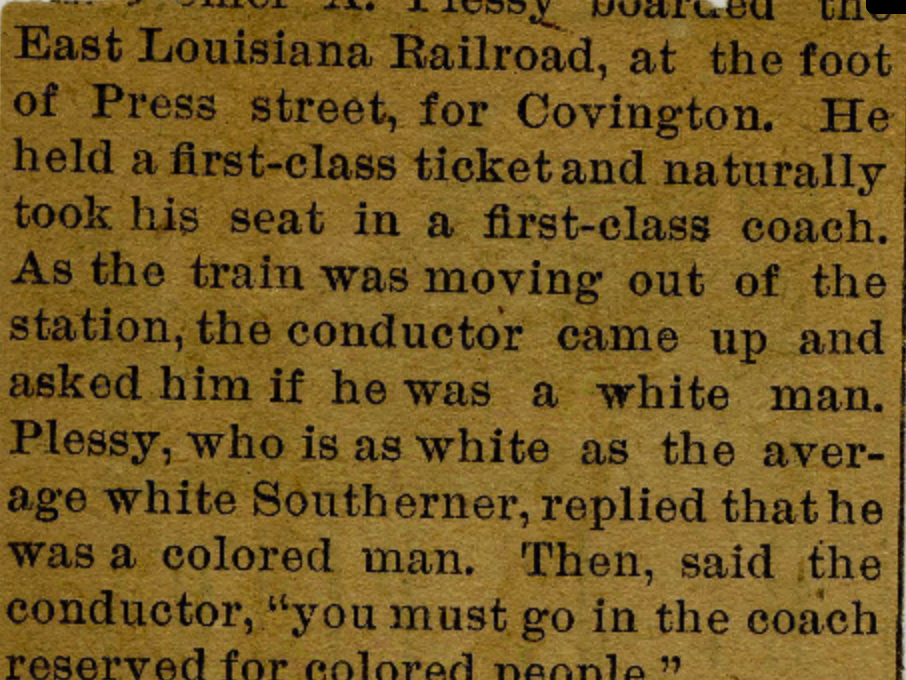 Untitled Article. New Orleans Crusader. June 1st, 1892. This Untitled article from The New Orleans Crusader. Article reflects on Homer Plessy sitting in the “whites-only” passenger car on the East Louisiana Railroad running between New Orleans and Covington, and the Citizens Committee’s actions the following day. Due to the article being clipped, portions of the article are missing. Date is unknown. |
| 3. Watch this re-enactment of the court proceedings. RESPONSE Use this re-enactment and the Court Documents below to explore the facts of the case. | State v. Homer Adolph Plessy Trial Re-enactment Discussion. Law of Library of Louisiana/. Celebrations at the Louisiana Supreme Court. (Length 1hr) |
| 4. Take a look at the court documents. | 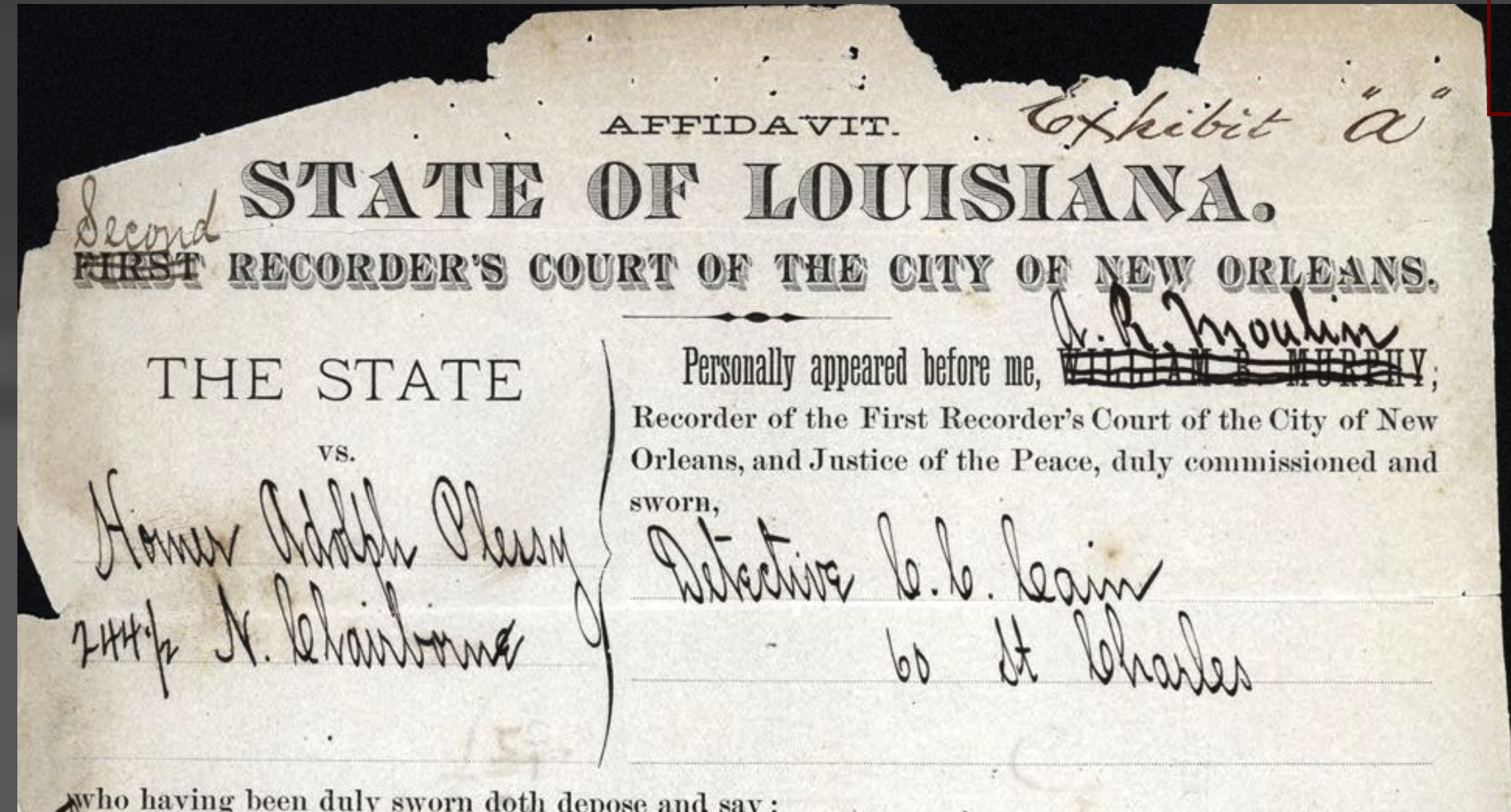 Ex Parte Plessy Louisiana Digital Library. University of New Orleans. This collection contains primary sources for the case including transcripts of the original court case, the legal arguments used by civil rights activist Albion W. Tourgée against the Separate Car Act of 1890, the defense of the arguments by Judge John Howard Ferguson and the decisions by former Governor and Chief Justice Francis T. Nicholls |
| 5. Read one or both of these articles that talk about the doctrine of “separate by equal” RESPONSE: Free writing: Write down anything you think, don’t screen your thoughts include any unanswered questions you have as you read. No thought is irrelevant or trivial. Think as if the author is talking to you about these issues, write down what you would ask them. | Baker, J. Newton. 1910 “The Segregation of White and Colored Passengers on Interstate Trains.” The Yale Law Journal 19, no. 6 (1910): 445-52. Accessed June 29, 2021. doi:10.2307/784882. https://www.jstor.org/stable/784882 Hunting, Warren B. 1911. “The Constitutionality of Race Distinctions and the Baltimore Negro Segregation Ordinance.” Columbia Law Review 11, no. 1 (1911): 24-35. Accessed June 29, 2021. doi:10.2307/1110322. https://www.jstor.org/stable/1110322 |
Jim Crow (– 1865
The Civil Rights Acts of 1875 entitled all races to ‘equal’ treatment in public accommodations, but an 1883 Supreme Court decision determined that this did not apply to private businesses. When the Plessy V. Ferguson case challenged this right to equality, the Supreme Court ruling that “Equal but Separate” was acceptable and fair implied that the North was unwilling to confront the racial segregation in the South. This empowered the Southern Whites who promptly strengthened the Black Codes and established “Jim Crow” laws that sanctioned segregation, rescinded the voting rights of blacks and prevented them from serving on juries or running for political office.
Explore “Jim Crow” Laws
While you explore these documents, think about the conflicting attitudes towards the Jim Crow Laws.
| Explore this collection of podcasts and personal accounts of the Jim Crow Era. Download and listen to accounts from African Americans and Whites as they share their details of their lives during this time. | 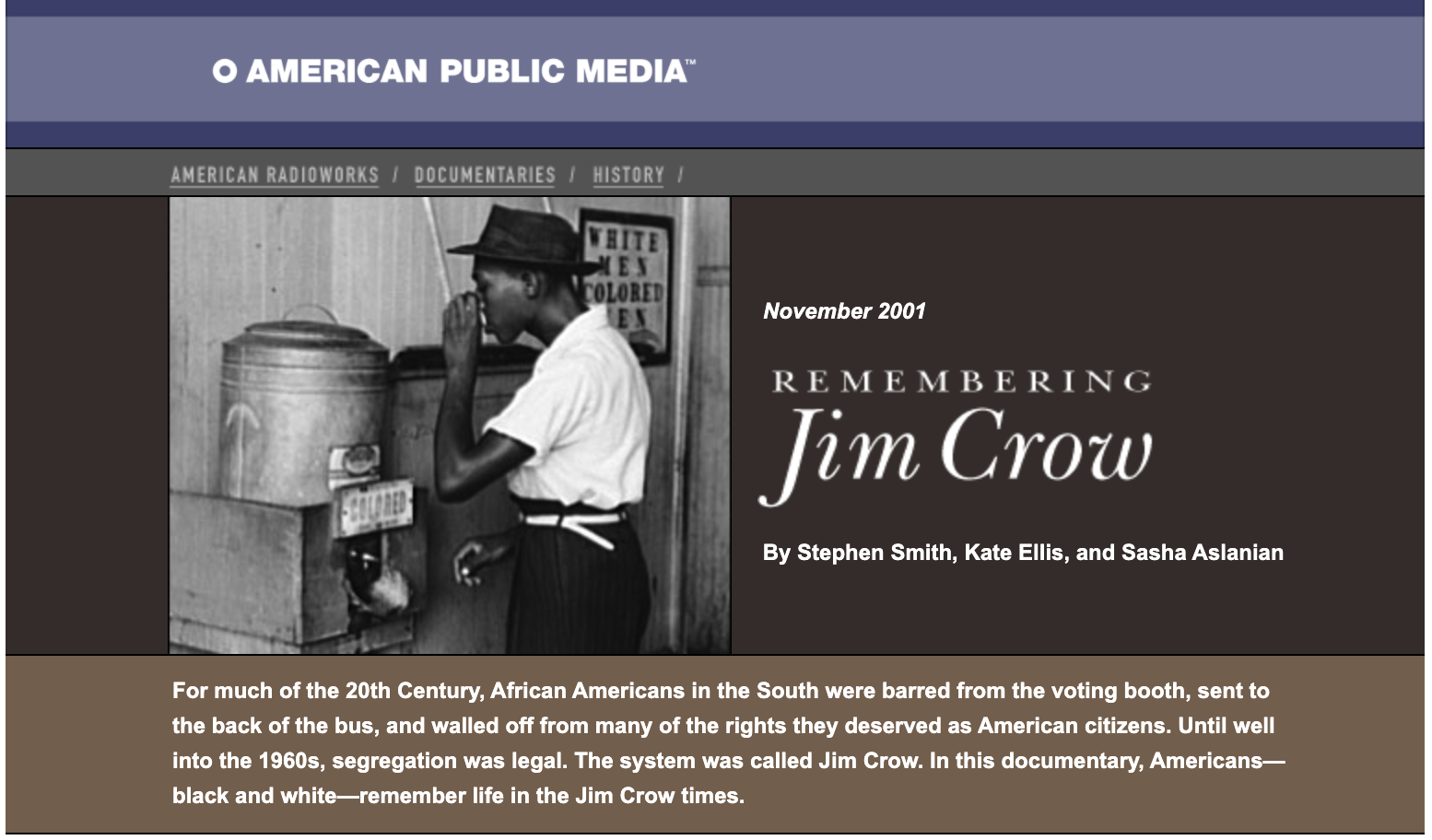 American Public Media. Remembering Jim Crow This is a series of podcasts and documentaries on the Jim Crow Laws and customs. “Our Negroes were happy.” Mary Levaux, 0:41 |
| Read this exposition by Senator N. B. Scott of West Virginia. | 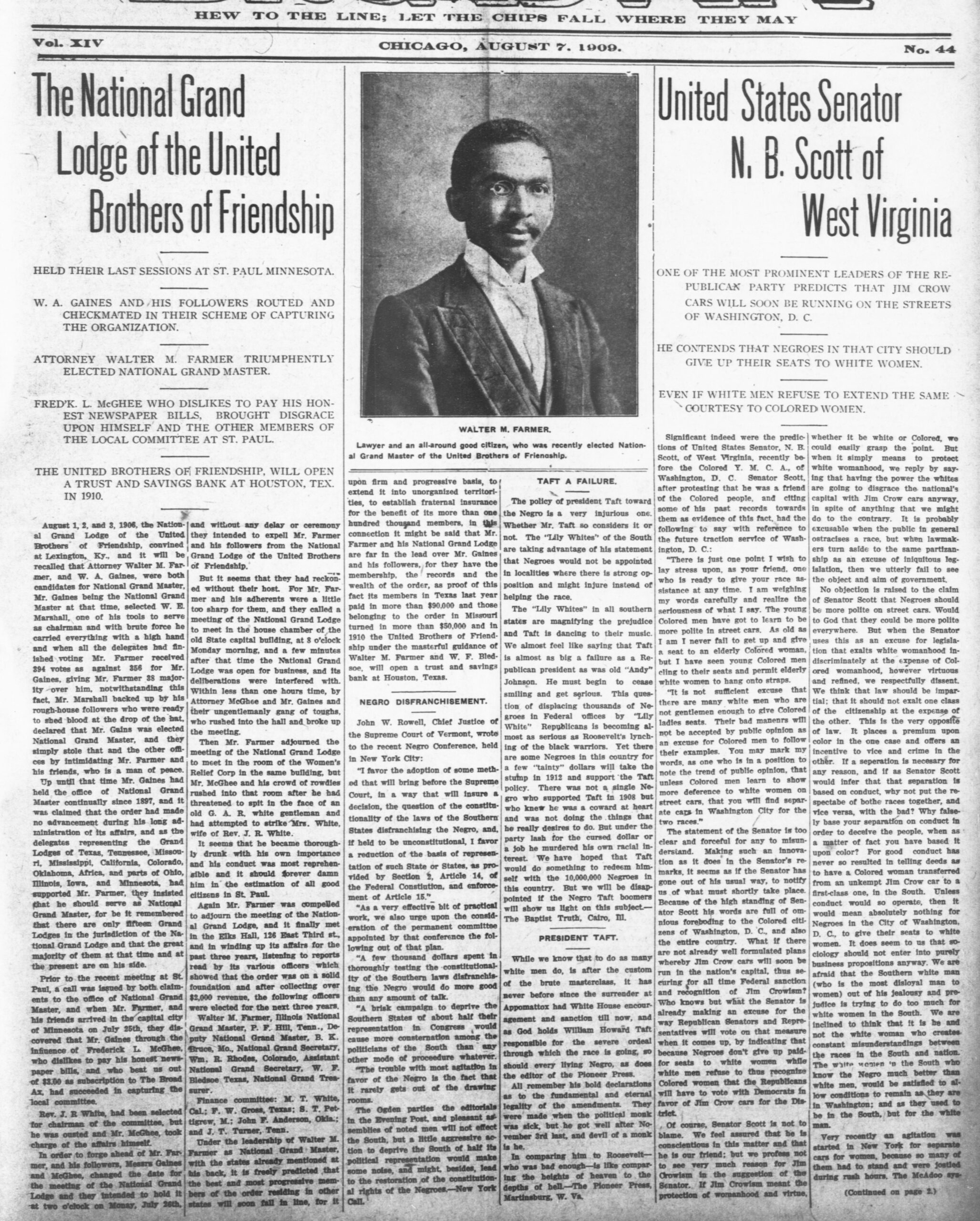 United States Senator. N. B. Scott of West Virginia. The Broadax. August 7th, 1909. pg. 1. One of the most prominent leaders of the Republican party predicts that Jim Crow will soon be practiced in Washington D.C. |
